Chicago Area & Suburbs
For most business owners and facility managers, commercial cleaning occupies a strange position in the budget. It’s recognized as necessary—no one wants a dirty workplace—but it’s almost always viewed as a cost to be minimized. A line item. An overhead expense.
This perspective is not just short-sighted; it’s expensive.
When you treat commercial cleaning as an afterthought, you aren’t simply letting dust accumulate. You are accelerating the depreciation of your most valuable physical assets, undermining employee health and productivity, and driving up long-term operating costs in ways that often go unnoticed until the damage is done.
The truth is that commercial cleaning, when done right, is one of the highest-return investments you can make in your facility. Here’s why.
The High Cost of Reactive Cleaning
The traditional approach to commercial cleaning is reactive: clean when it looks dirty, address problems when they become visible, and treat every issue as an isolated incident. This approach might appear cost-effective in the short term, but the long-term financial consequences are staggering.
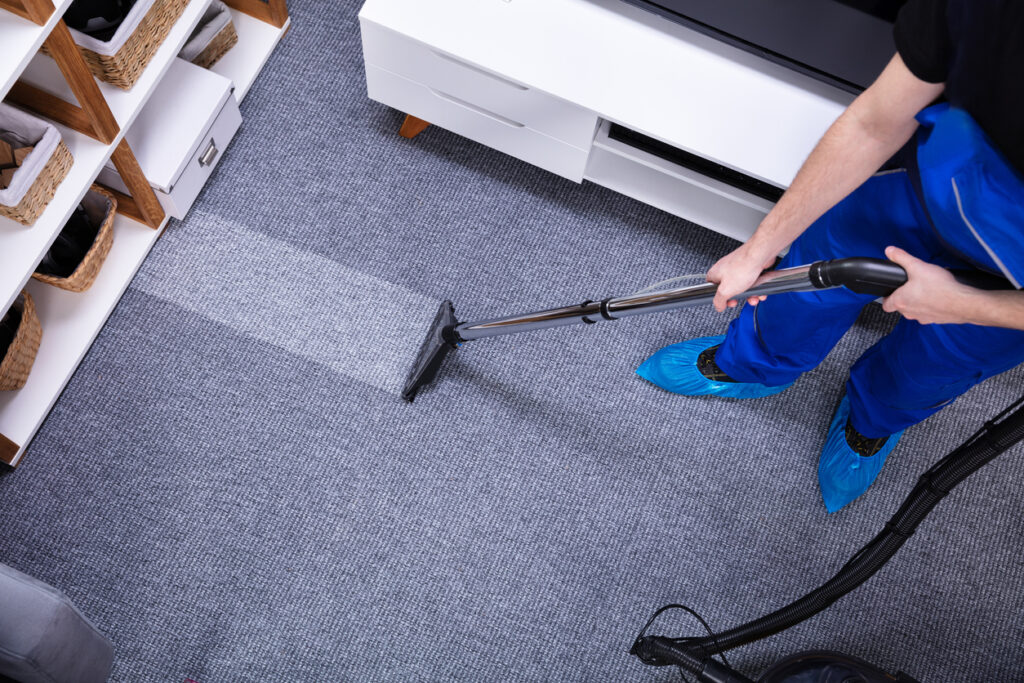
Accelerated Asset Replacement. Every material in your facility—from flooring and furniture to HVAC systems and fixtures—has a projected lifespan. That lifespan is dramatically shortened when surfaces aren’t properly maintained. Regular commercial cleaning can extend the lifespan of flooring by up to 30%, according to ISSA data. For a mid-size institution spending $500,000 annually on janitorial services, floor care alone represents 30–40% of that total—meaning $150,000 to $200,000 is directly tied to floor maintenance. When that maintenance is neglected, you’re not looking at a mop-and-bucket fix; you’re facing early, five-figure capital expenditures for premature replacement.
Energy Waste. HVAC systems clogged with dust work harder to move air. Research has shown that routine HVAC cleaning can reduce fan and blower energy consumption by 41% to 60%, while increasing supply airflow by 10% to 46%. Given that HVAC systems account for a significant portion of total building energy consumption, the financial impact of neglected system maintenance is substantial. Every dollar spent on proactive maintenance can save up to $5 in future repairs and energy use.
Operational Inefficiency. Reactive maintenance is fundamentally more expensive than preventive care. Organizations that implement comprehensive preventive maintenance programs report 30-50% reductions in unexpected downtime and 20-40% decreases in maintenance costs. When your cleaning strategy is reactive, you’re paying a premium for the privilege of responding to emergencies rather than preventing them.
The ROI of a Strategic Cleaning Program
When commercial cleaning is elevated from a reactive expense to a strategic investment, the returns manifest across multiple dimensions of your business.
Asset Preservation and Delayed Capital Expenditures
This is perhaps the most direct and measurable return on investment. Proper cleaning preserves the integrity of your physical assets, delaying costly replacements and protecting your capital budget.
According to ISSA’s “Value of Clean” research, regular cleaning can extend the lifespan of flooring by up to 30%. Properly cared-for carpet can last up to three times longer than poorly maintained carpet. For a commercial facility with thousands of square feet of flooring, this translates into millions of dollars in deferred capital expenditures over the life of the building.
The principle applies to every surface and system in your facility. Routine cleaning removes abrasive debris that contributes to surface degradation, reducing the frequency of floor refinishing, carpet replacement, and fixture repairs. Professional cleaning serves as preventive maintenance for these assets by extending the lifespan of flooring, carpets, and fixtures through proper care techniques and appropriate cleaning agents.
Employee Health, Productivity, and Absenteeism
The connection between a clean workplace and workforce performance is one of the most underappreciated aspects of the ROI of commercial cleaning. The data is compelling.
According to CDC data, absenteeism costs U.S. employers $225.8 billion annually—roughly $1,685 per employee. ISSA research shows that implementing a high-quality cleaning program can reduce employee absenteeism by up to 46%. For an office of 100 employees with an average salary of $60,000, that reduction translates into hundreds of thousands of dollars in recovered productivity annually.
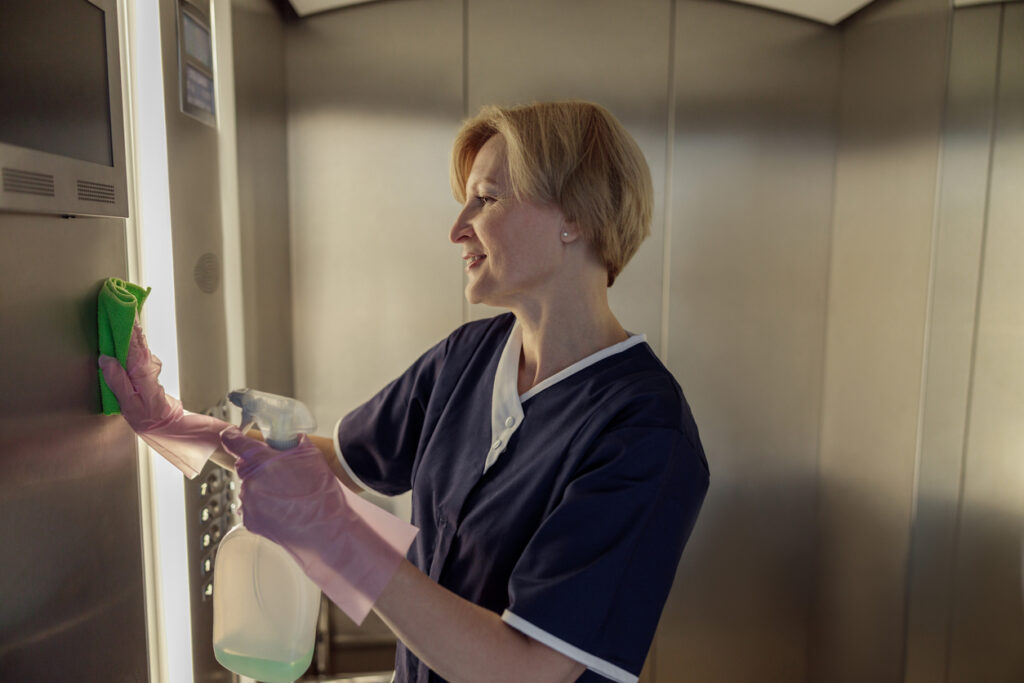
Even more significant is the impact on presenteeism—when employees come to work sick and underperform. According to ISSA, presenteeism costs U.S. businesses 10 times more than absenteeism, or over $1.5 trillion annually. Clean air, disinfected surfaces, and sanitized restrooms reduce the spread of germs, minimizing presenteeism and improving workforce well-being.
The productivity benefits extend beyond absenteeism. Improved air quality, surface cleanliness, and better restroom hygiene contribute to higher cognitive function and employee satisfaction. ISSA reports that cleaner air alone can boost productivity by 2–8%. Poor indoor air quality can affect respiratory health, increase absenteeism, and reduce overall building performance. Studies have consistently linked better indoor air quality to stronger cognitive performance, faster task completion, fewer errors, and lower absenteeism.
Given that Americans spend approximately 90% of their time indoors, the quality of the indoor environment has an outsized impact on human health and organizational performance.
Customer Perception and Brand Reputation
In commercial spaces, appearance directly impacts customer perception and satisfaction. A clean and well-maintained environment enhances the customer experience, increasing foot traffic and sales. Conversely, a dirty or unkempt space drives customers away, resulting in lost revenue and a declining reputation.
Cleanliness is ranked as the most important factor when deciding where to shop, among factors such as lighting, temperature, and special events. For retail, hospitality, and customer-facing businesses, the cleanliness of your facility is not a secondary concern—it’s a primary driver of revenue.
Sustainability and Compliance
Modern commercial cleaning is increasingly aligned with sustainability goals. Sustainable cleaning programs that extend product life cycles and promote circular-economy practices reduce material use and waste disposal while boosting employee morale and brand reputation.
According to studies, 72% of managers said sustainability practices are a key factor when awarding janitorial contracts. Biodegradable, recycled, and compostable packaging, along with cleaning agents that reduce chemical waste, are at the top of current trends.
For healthcare and food processing environments, commercial cleaning is an extension of compliance strategy. Proper protocols aren’t just about hygiene—they’re about audit-readiness and mitigating operational risk.
The Shift to Data-Driven Cleaning
The most sophisticated commercial cleaning programs have moved beyond static schedules and guesswork. Data-driven cleaning involves collecting, analyzing, and using data to inform cleaning activities and support decision-making.
By tracking metrics such as cleaning frequency, duration, and resources used, cleaning professionals can optimize their processes. The benefits include increased operational efficiency, reduced costs, and improved quality of cleaning services.
Real-world examples demonstrate the impact. One university campus that implemented a data-driven approach to reduce water and chemical usage achieved a 30% reduction in water usage and a 20% decrease in chemical consumption. Managers using data-driven cleaning technology have reported reducing complaints by 75%, improving efficiency by 68%, and achieving hygiene improvements in 97% of their facilities.
The industry is embracing this shift. Research shows that by 2026, 80% of large contract cleaning firms will rely on digital platforms for work quality audits and workforce accountability. Sixty-two percent of commercial cleaning companies are investing in IoT-enabled tools to optimize service frequency and reduce waste.
Emerging Trends Shaping Commercial Cleaning
As the commercial cleaning industry continues to evolve, several trends are reshaping how facility managers approach this critical function.
Technology and Automation. AI and IoT are game changers, enabling companies to maximize results through smart sensors, automate certain cleaning functions with robots, and provide data-driven schedules to improve efficiency and reduce costs. From sensor-driven scheduling to collaborative robots, smart solutions are boosting productivity and enhancing the everyday experience for employees.
Indoor Air Quality as a Priority. Along with sanitization, air quality plays a large part in limiting the spread of germs indoors. More companies are installing HEPA and UV-C filtration systems alongside air purification solutions integrated directly into HVAC systems.
Sustainability. Green cleaning products, water-saving technology, and reduced chemical waste continue to gain traction as companies prioritize their ESG goals. The global commercial cleaning market reflects this growth, with an estimated value of $67.2 billion in 2025 and projected to reach $140.4 billion by 2035.
Rethinking Your Commercial Cleaning Strategy
If your current provider is not reporting on asset condition, tracking performance metrics, or aligning cleaning protocols with your facility’s specific material science, you are missing out on key intelligence.
A truly expert commercial cleaning partner acts as the “eyes and ears” of your facility. They should be able to tell you:
“The sealant in the high-traffic lobby is thinning; we need to re-burnish before the underlying substrate is exposed.”
“The HVAC intake filters are loading up 20% faster due to seasonal conditions; we should adjust our change-out frequency to protect the air handlers.”
“The data shows restroom usage peaks at 10 a.m. and 2 p.m.; we should adjust our cleaning schedule accordingly.”
When you align your commercial cleaning services with your facility’s lifecycle goals, the service shifts from an “expense” to an ROI-positive investment. You extend asset life, reduce energy costs, improve occupant health and productivity, and protect against costly premature replacements.
Protect Your Investment
Your facility is your company’s most visible brand asset. It’s where your employees spend their days, where your clients form their impressions, and where your operations generate value. Don’t let improper maintenance turn a world-class environment into a depreciating liability.
Whether you are managing a commercial office building, a retail space, a healthcare facility, or an industrial complex, the focus should always be on preserving the space’s integrity through strategic, data-driven commercial cleaning.
Is your current cleaning partner protecting your assets, or just pushing dirt around?
Schedule a Facility Asset Health Audit with Lake City Janitorial Inc. Let’s move beyond basic janitorial work and build a commercial cleaning strategy that protects your investment for years to come.